
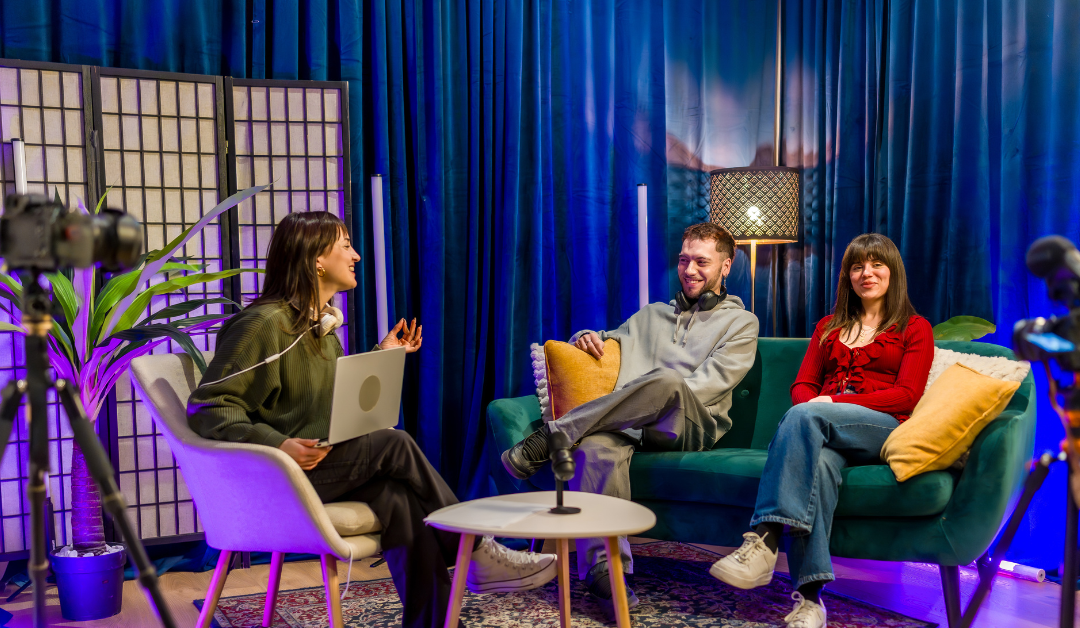
What Happens if a Guest Gets Injured During Your Podcast? (Liability 101)
You’ve spent weeks chasing that “dream guest”. They finally arrive at your studio; the energy is electric, and the conversation is gold. Then, it happens. They trip over a stray XLR cable, lose their balance, and take a nasty tumble into your desk. Or perhaps a heavy boom arm loses its grip and clips them on the forehead.
Suddenly, the “gold” isn’t the content—it’s the potential medical bill you’re looking at.
Most podcasters focus on “cancel culture” or copyright strikes as their primary risks. But the physical world is just as litigious as the digital one. If someone gets hurt on your watch, your passion project could quickly turn into a financial nightmare. In this guide, we’re breaking down the cold, hard realities of podcasting liability and how to shield your brand from the unexpected.
The Reality of Studio Accidents
Let’s get one thing straight: accidents don’t care about your download numbers. Whether you’re recording in a professional studio in Soho or a converted walk-in closet in your apartment, you have a “duty of care” to anyone you invite into that space.
The Problem: Physical Risk in a Digital Medium
We often think of podcasting as a low-risk endeavour. You sit, you talk, you upload. However, studios are actually obstacle courses. Between high-voltage lighting rigs, tangled cables (the classic “trip hazard”), and heavy equipment mounted precariously on stands, the opportunities for a mishap are surprisingly high. If a guest sustains an injury—be it a twisted ankle or a concussion—you may be held legally responsible for their medical expenses, lost wages, and even “pain and suffering”.
The Agitation: The Cost of Being Unprotected
Imagine your guest is a high-earning executive. They trip over your lighting setup and break their wrist. They can’t work for six weeks. They decide to sue you for $50,000 to cover surgery and loss of income. Without the right business structure or insurance, that money comes out of your pocket. Your car, your savings, and your future earnings are all on the table. For most independent creators, a single mid-sized lawsuit is enough to end their career permanently.
The Solution: Preparation and Protection
The good news? You don’t have to live in fear. By implementing a “safety-first” studio culture, using proper legal disclaimers, and securing a robust insurance policy like Riverside Insurance or a standard BOP (Business Owner’s Policy), you can mitigate 99% of these risks. We’ve done the legwork to show you exactly how to protect your assets while keeping your guests safe.
The Legal Framework: Why You Are Liable
In legal terms, when you invite a guest to your studio, they are considered a “business invitee”. This means you owe them the highest level of care. You are expected to keep the premises safe and warn them of any non-obvious dangers.
Premises Liability Explained
Premises liability is the area of law that holds property owners (or renters) responsible for injuries that happen on their land. If you host your podcast at home, your standard homeowners insurance likely will not cover a business-related injury. Most homeowners’ policies have specific exclusions for “business pursuits”. This is the “hidden trap” that catches most indie podcasters off guard.
Negligence: The Four Pillars
For a guest to successfully sue you, their lawyer generally has to prove four things:
-
Duty: You had a responsibility to keep the studio safe.
-
Breach: You failed that duty (e.g., you didn’t tape down the cables).
-
Causation: The breach caused the injury.
-
Damages: The guest actually suffered a loss (medical bills, etc.).
Comparison: Best Protection Strategies for Podcasters
Our Top Recommendation: The “Pro-Shield” Approach
If you are serious about your show, we recommend a combination of general liability insurance and LLC formation. While we often suggest tools like Hostinger for your website, for legal protection, we advocate for a dedicated business policy.
Why General Liability Insurance is Non-Negotiable
General liability (GL) insurance is the “bread and butter” of business protection. It typically covers:
-
Bodily Injury: If the guest falls.
-
Property Damage: If you accidentally break the guest’s expensive laptop.
-
Personal and Advertising Injury: If you accidentally slander someone on air.
Pros & Cons of Business Liability Insurance
Pros:
-
Peace of Mind: You can focus on the interview, not the tripod’s stability.
-
Legal Defence: If you get sued, the insurance company pays for your lawyer (which can cost $300+/hour).
-
Professionalism: High-tier guests or agencies may ask for your “COI” (Certificate of Insurance) before appearing.
Cons:
-
Monthly Expense: It’s an extra $30–$50 per month.
-
Deductibles: You’ll still have to pay a small amount out of pocket if a claim is filed.
Step-by-Step: How to Secure Your Podcast Studio
Don’t wait for a “close call” to take action. Follow these steps to make your recording space as safe as a bank vault.
1. Cable Management (The #1 Culprit)
Ninety percent of studio injuries involve tripping. Use gaffer tape (not duct tape, as it leaves residue) to secure every single cable to the floor. Better yet, use cable ramps for high-traffic areas. If a guest has to step over something, you’ve already failed.
2. Equipment Stability Check
Heavy microphones like the Shure SM7B require sturdy stands. If you’re using cheap, lightweight boom arms clamped to a flimsy desk, you’re asking for a collapse. Check your “tightness” settings before every session.
3. The “Pre-Flight” Safety Briefing
We suggest a 30-second safety talk with every guest. “Hey, watch your step near the lights; the coffee is hot, and please don’t move the mic stands yourself.” It sounds “corporate”, but it demonstrates you’ve fulfilled your duty of care.
4. Drafting a Simple Liability Waiver
While a waiver won’t always stop a lawsuit, it acts as a powerful deterrent. Have your guest sign a “Guest Release Form” that includes a clause about physical safety and assumption of risk.
What to Do Immediately After an Injury
If the worst happens and a guest goes down, your response in the first 10 minutes is critical.
-
Prioritise Health: Don’t worry about the recording. Stop the show and render aid. Call 911 if necessary.
-
Document Everything: Take photos of the scene exactly as it was when the accident happened. Take photos of the lighting, the cables, and the shoes the guest was wearing.
-
Gather Witnesses: If you have a producer or another guest present, ask them to write down what they saw.
-
Do Not Admit Fault: This is hard but vital. Saying “I’m so sorry; I knew that cable was loose” is a legal admission of negligence. Stick to “I’m so sorry this happened; let’s get you some help.”
-
Contact Your Agent: Notify your insurance provider within 24 hours.
Long-Tail Keywords to Consider for Your Legal Research
-
Best podcast liability insurance for home studios
-
Podcast guest release form with liability clause
-
How to prevent guest injuries in a recording studio
-
Small business insurance for digital content creators
Professional Advice: The LLC Shield
We cannot stress this enough: Separate your person from your podcast. If you run your podcast as a “sole proprietorship”, you and the podcast are the same legal entity. If the podcast gets sued, they can take your house.
By forming a Limited Liability Company (LLC), you create a “corporate veil”. If a guest gets injured and sues “Awesome Podcast LLC”, your personal bank accounts are generally protected. It is the single best investment you can make after your first 1,000 downloads.
FAQ: Protecting Your Podcast Empire
1. Does my homeowners’ insurance cover podcast guest injuries?
Generally, no. Most homeowners’ policies exclude “business activities”. If you are making money from your podcast (ads, Patreon, etc.), it is a business. You need a “Home-Based Business Endorsement” or a separate commercial policy.
2. Is a verbal “watch out” enough to protect me?
While helpful, verbal warnings are notoriously hard to prove in court. A written Guest Release Form combined with physical safety measures (like taped-down cables) is your best defence.
3. How much does podcast liability insurance cost?
For a standard $1 million / $2 million policy, expect to pay between $350 and $700 per year. This often includes “Professional Liability” (Errors & Omissions), which protects you if you accidentally give bad advice on air.
4. What if I record in a rented studio?
Usually, the studio owner’s insurance covers the “structure”, but your guest might still sue you for bringing them there. Check your rental agreement; most professional studios require you to have your own liability insurance anyway.
5. Can I just record via Zoom to avoid liability?
Recording remotely is the ultimate “safety” play. If the guest is in their own home, you aren’t responsible for their physical environment. However, if you want that “in-person” chemistry, you have to accept and manage the physical risks.
Final Thoughts: Don’t Let a Trip Trip You Up
Building a podcast is about connection, storytelling, and community. It shouldn’t be about legal battles and medical bills. By treating your studio like a professional business—taping down those cables, getting a simple LLC, and carrying a basic insurance policy—you ensure that the only thing “breaking” in your studio is a new record for downloads.
Stay safe, stay insured, and keep recording.
Disclaimer: We are podcasters and tech journalists, not attorneys. This article provides general information and should not be substituted for professional legal advice. Always consult with a qualified lawyer in your jurisdiction regarding business liability.